Osaka's Mitsutera Temple Fuses 200-Year Heritage with Modern Hotel
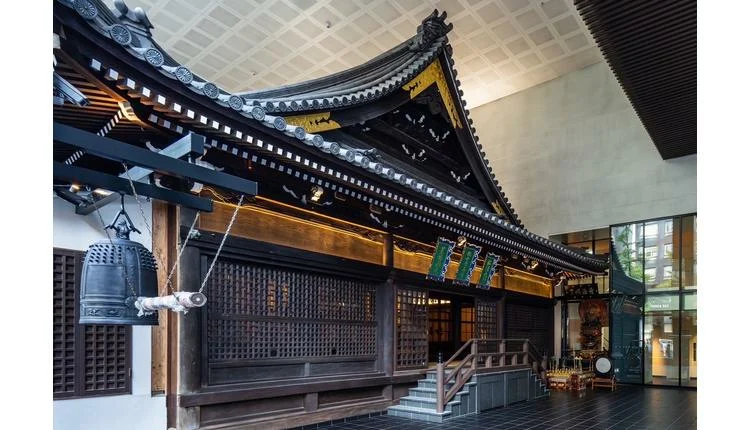
Mitsutera Temple in Osaka's Shinsaibashi district has preserved its 200-year-old main hall by relocating it intact using the traditional hikiya technique and building a 15-storey hotel around it. The four-year project, completed in 2019, has drawn recognition from ArchDaily and offers visitors mindfulness experiences rooted in a 1,300-year Buddhist tradition.
A Temple Reimagined for Modern Osaka
In the heart of Shinsaibashi, one of Osaka's busiest entertainment districts, Mitsutera Temple has found a remarkable way to honour its past while embracing the future. The temple's main hall, originally rebuilt in 1808 during the Edo period, has survived both the bombings of World War II and the pressures of modern urban redevelopment. Today, it stands preserved within the structure of a new 15-storey, four-star hotel and commercial complex.
The Hikiya Technique: Moving History Intact
To achieve this unusual feat of conservation, the temple's custodians turned to *hikiya*, a centuries-old Japanese construction method that allows an entire building to be lifted and relocated without dismantling it. Over a four-year project beginning in 2019, the historic hall was carefully shifted on its foundations, enabling builders to construct the surrounding mixed-use tower without disturbing the original structure. The result is a striking architectural contrast — a weathered Edo-period hall nestled within a gleaming contemporary building.
The project has since caught the attention of international architecture circles, earning recognition from the respected design publication ArchDaily for its inventive approach to heritage preservation in dense urban settings.
A Reflection of Osakan Values
Beyond its architectural significance, Mitsutera's story reflects a deeper cultural philosophy known as *OKAGE-san* — an Osakan expression of gratitude, interdependence, and community spirit. Historically a major trading and commercial centre, Osaka has long valued relationships and mutual support as the foundation of its identity. The temple's preservation effort is seen as a physical embodiment of this ethos, ensuring that heritage is carried forward for future generations rather than sacrificed for commercial development.
Experiences for Visitors
Mitsutera is not merely an architectural curiosity; it remains an active spiritual site rooted in a Buddhist tradition spanning 1,300 years. Visitors can take part in morning services and other cultural and mindfulness activities, gaining insight into Buddhist practices amid the hum of one of Osaka's liveliest neighbourhoods. The temple thus offers a quiet, contemplative counterpoint to the shopping and nightlife that surrounds it.
Why It Matters for Indian Travellers
Japan continues to be a growing favourite among Indian outbound travellers, particularly those seeking a mix of culture, history, and contemporary urban experiences. With direct and one-stop flight connectivity from major Indian cities to Osaka improving, destinations like Mitsutera Temple add a compelling cultural dimension to itineraries that typically focus on Osaka Castle, Dotonbori, and nearby Kyoto. For Indian tourists interested in heritage conservation, architecture, or mindfulness tourism, a visit to this temple-hotel hybrid offers a distinctive experience not commonly found elsewhere in Japan.
As more travellers seek meaningful, experience-led journeys rather than standard sightseeing, sites like Mitsutera — where history and modern hospitality coexist under one roof — are likely to feature more prominently in curated Japan tour packages from Indian travel operators.
Frequently Asked Questions
What makes Mitsutera Temple unique?
Its 200-year-old Edo-period main hall has been preserved intact inside a modern 15-storey hotel, using the traditional Japanese hikiya relocation technique.
Where is Mitsutera Temple located?
It is located in Shinsaibashi, a popular entertainment and shopping district in Osaka, Japan.
What is the hikiya technique?
Hikiya is a traditional Japanese construction method used to move an entire building intact from its original foundations without dismantling it.
Can visitors experience Buddhist culture at Mitsutera?
Yes, the temple offers morning services and mindfulness activities connected to its 1,300-year Buddhist tradition.
Why is this relevant for Indian travellers?
As Japan grows in popularity among Indian tourists, sites like Mitsutera add unique cultural and architectural experiences to Osaka itineraries.
Get Full Itinerary on WhatsApp
Share your details and we'll send you the complete travel plan!


